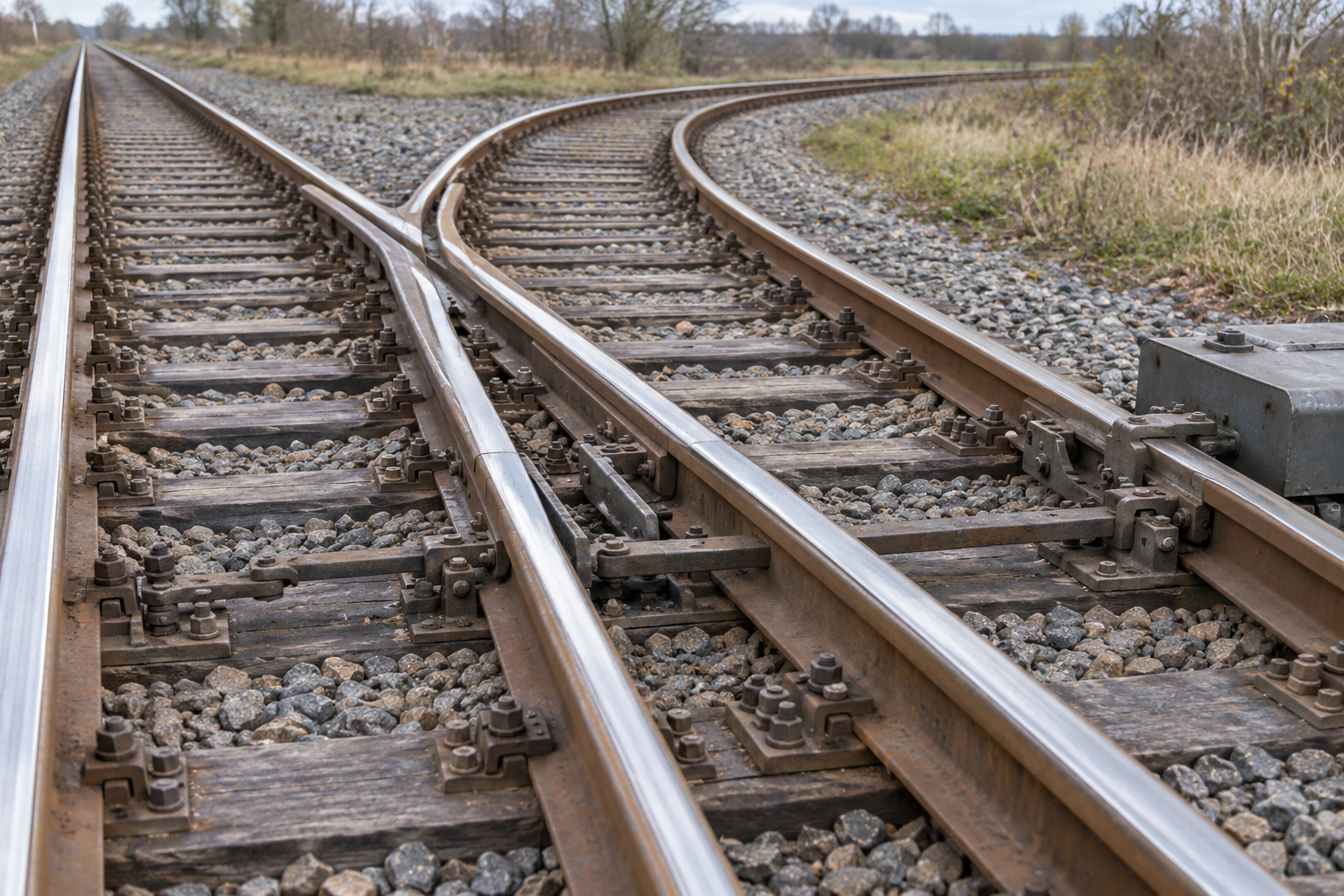
The maintenance behind a railway switch
A switch works when its rail blades fit, its mechanism completes the movement, and its detection reports the route truthfully. Each promise demands a different kind of maintenance.
A place for slower thoughts
Railways as systems of wheels, signals, timetables and maintenance.
Words by Noah Bellamy
A switch works when its rail blades fit, its mechanism completes the movement, and its detection reports the route truthfully. Each promise demands a different kind of maintenance.
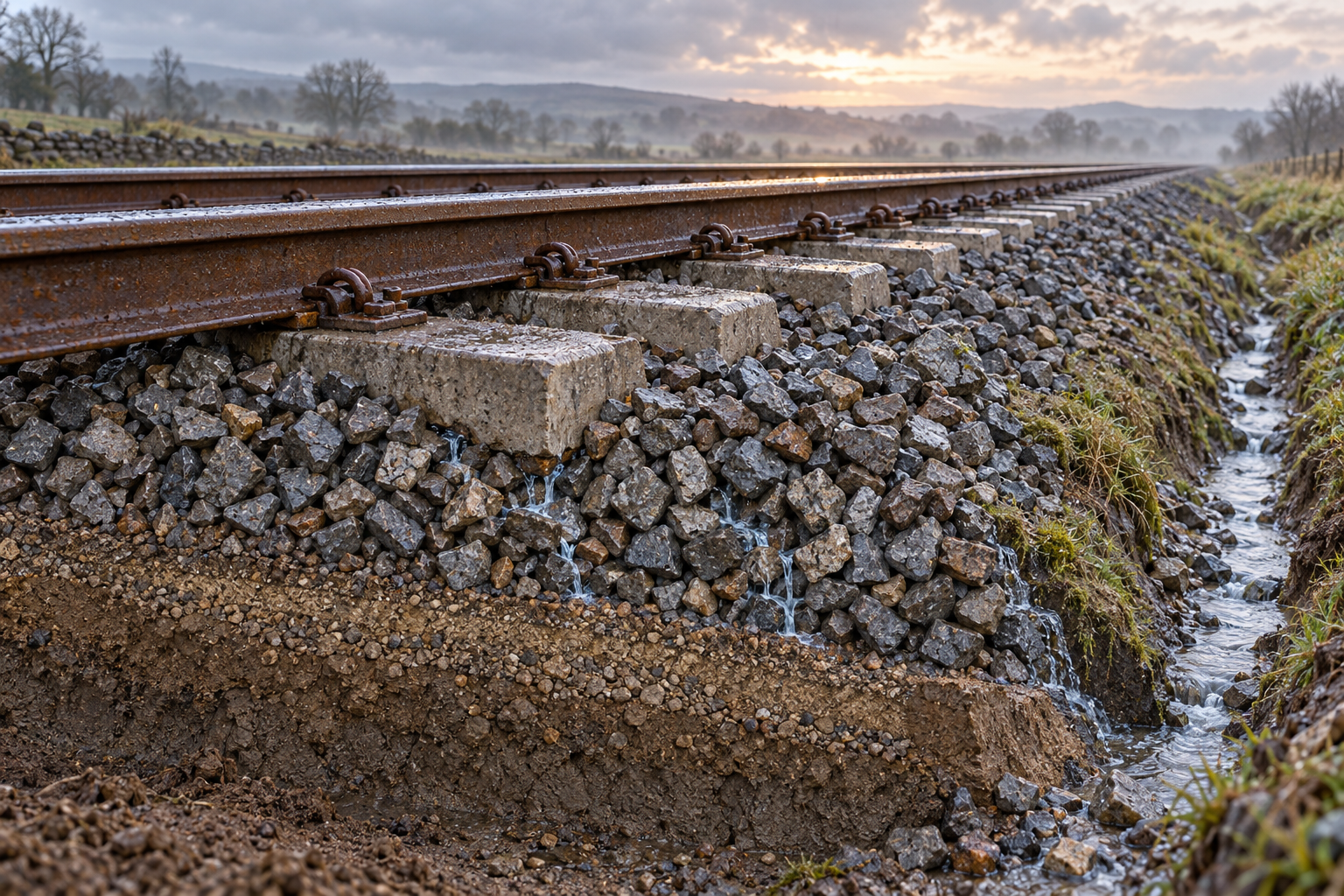
The crushed stone under a railway sleeper must hold the track in place while leaving water a way out. Its condition can change a line's geometry long before the rail itself wears out.
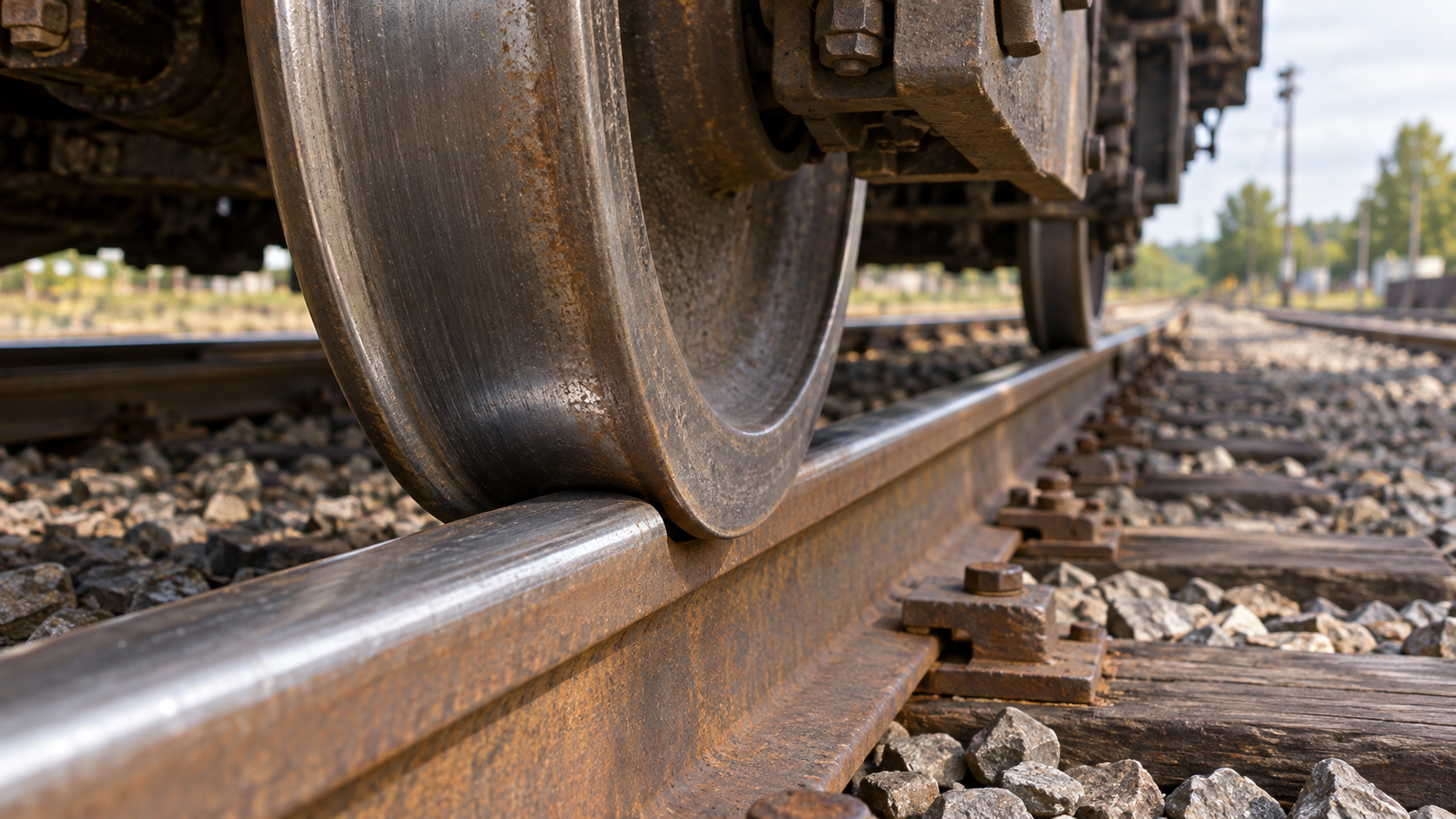
A railway wheel does more than roll. Its tread meets the rail at changing radii, while its flange waits beside the rail; together with the fixed axle, those shapes help a train follow curves and stay stable on straight track.
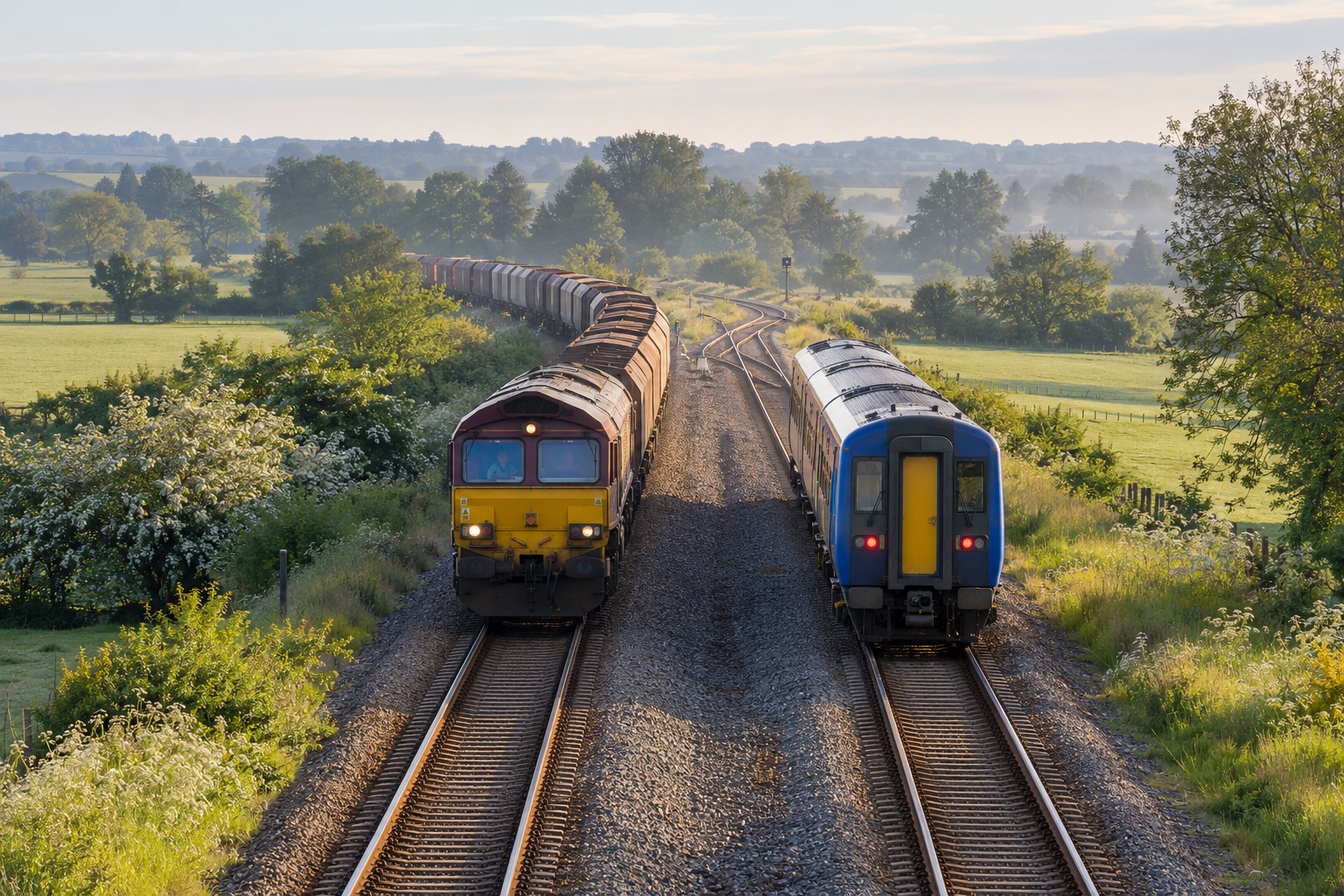
A passing loop is a brief stretch of double track on a single-track railway. Its location and length decide where trains can meet, how timetables fit together, and how delays spread.
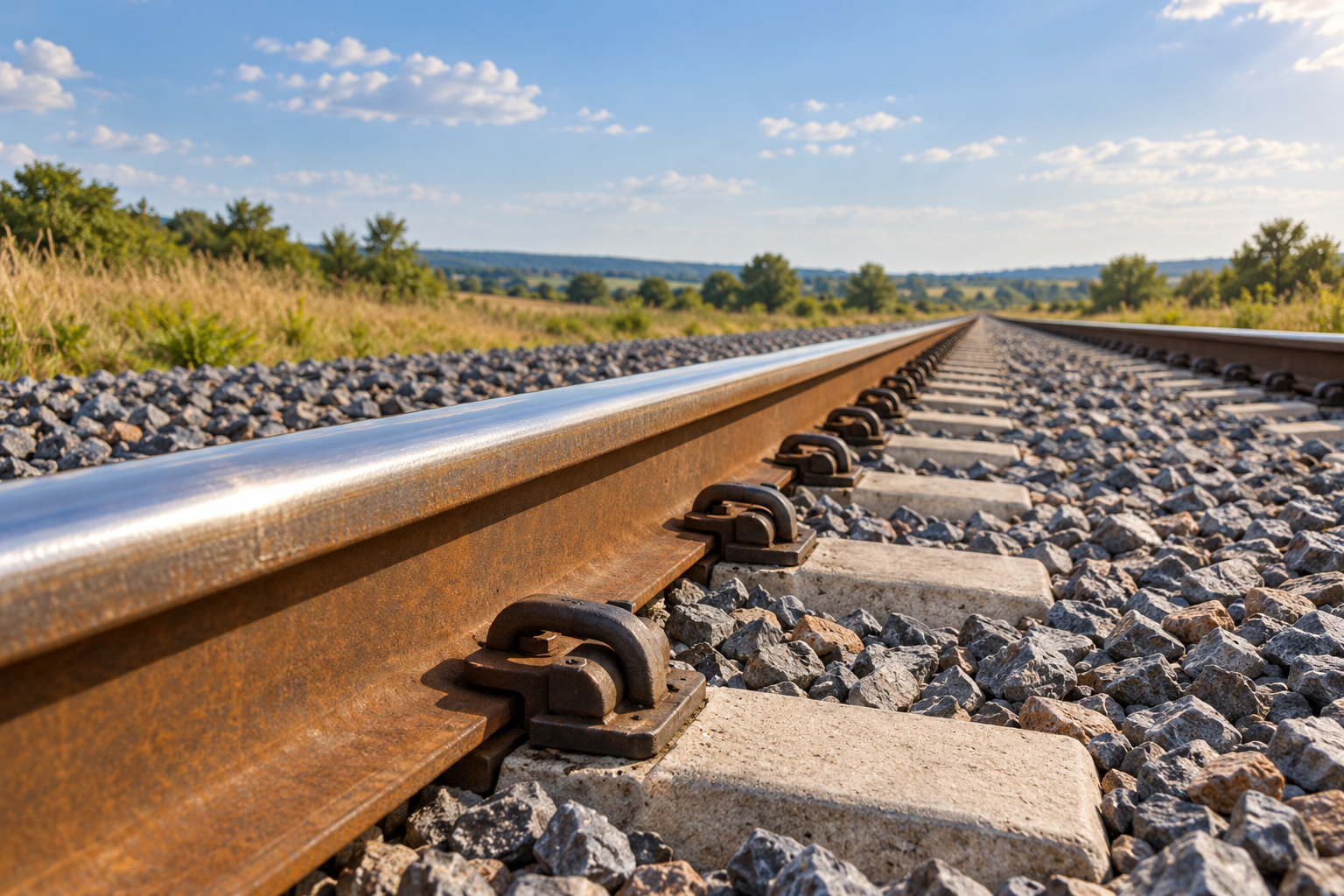
Long welded rails have few expansion gaps. Their summer margin lies in a chosen neutral temperature and in the fastenings, sleepers and ballast that hold them straight.